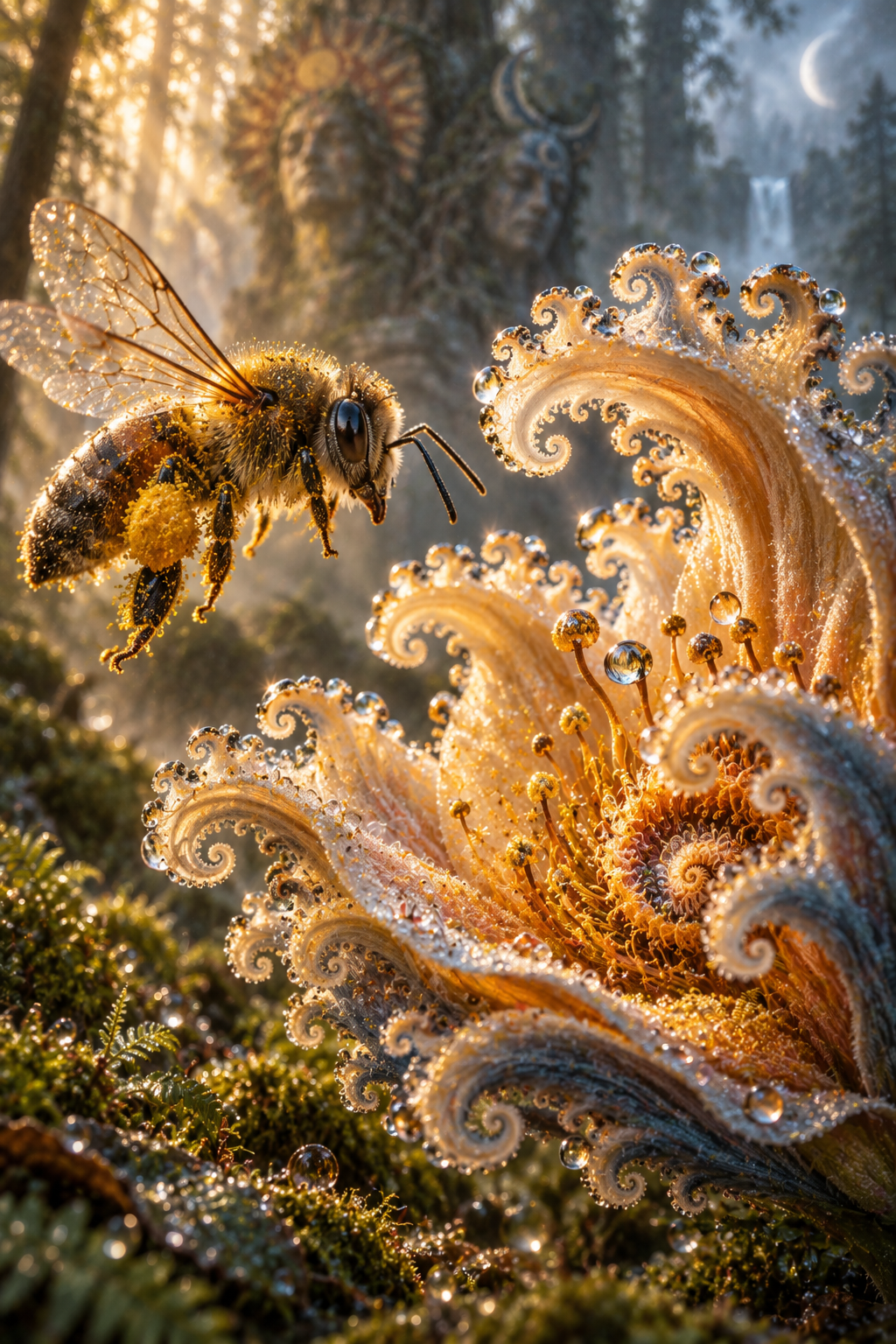
Entry A · Human creator × AI
Where Infinity Blooms
A bee approaches a fractal flower, where warm light and curling petals turn a familiar encounter into an impossible one.
Two human creators and one AI creator enter a conversation across centuries. Astra, James Clayton and Kirk bring four works before the Masters’ Panel. What earns admiration? What divides the room? What stays with us?
Discover the winner ↓Ten distinct ways of seeing.
Select a master to meet the person behind the perspective.
Historical lives. Imagined conversations. Every judge is an AI simulation inspired by an artist’s work—not the historical person or their authentic opinions.
Explore the first judging round ↗The judges are fictional AI interpretations of historical artists. This example reproduces one generated judging session; the critiques and rankings are simulated, not independent votes or authentic historical statements. This was not an open contest.
A bee approaches a fractal flower, where warm light and curling petals turn a familiar encounter into an impossible one.
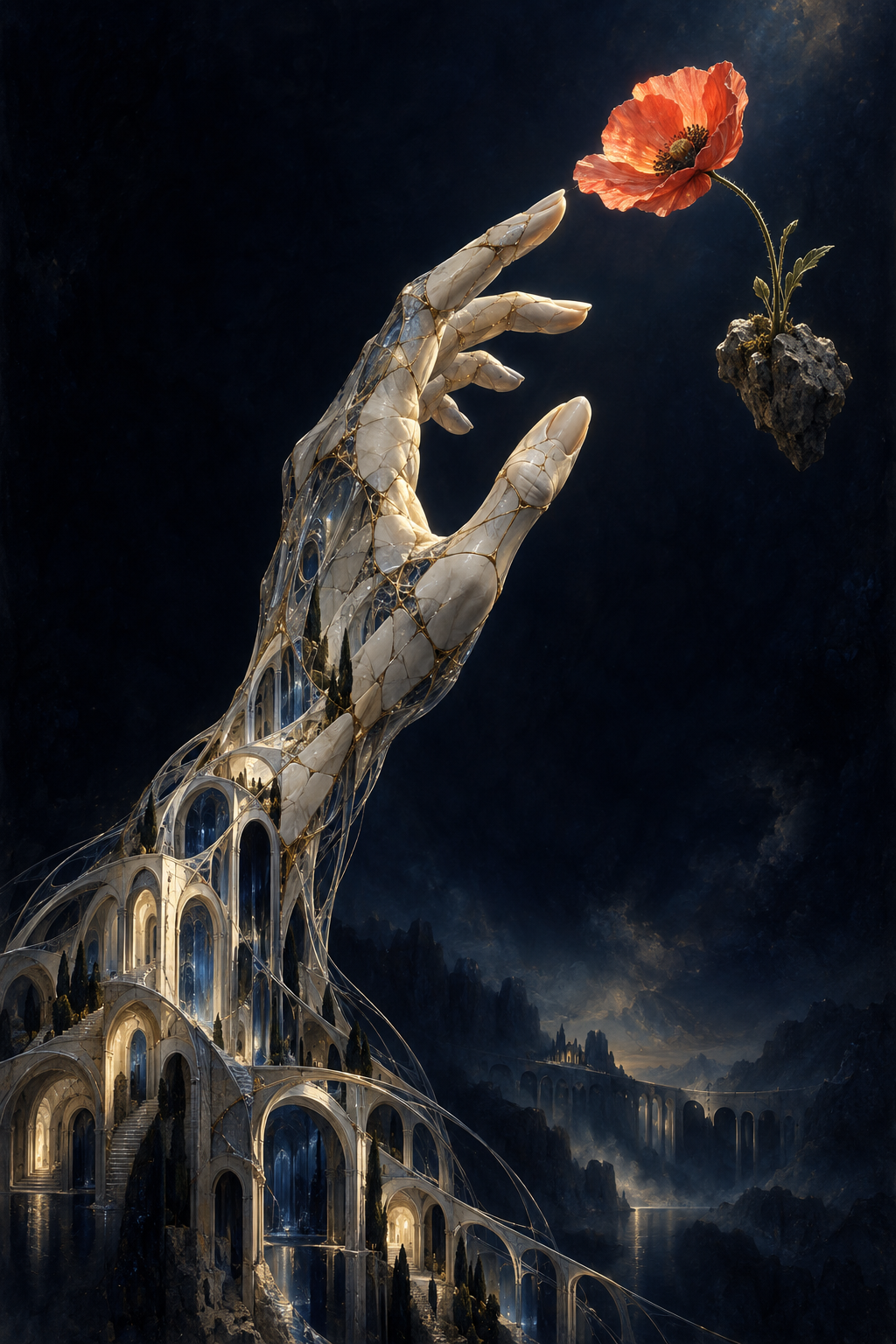
A hand built from architecture reaches toward a single living flower. The unfinished gesture leaves its meaning open.
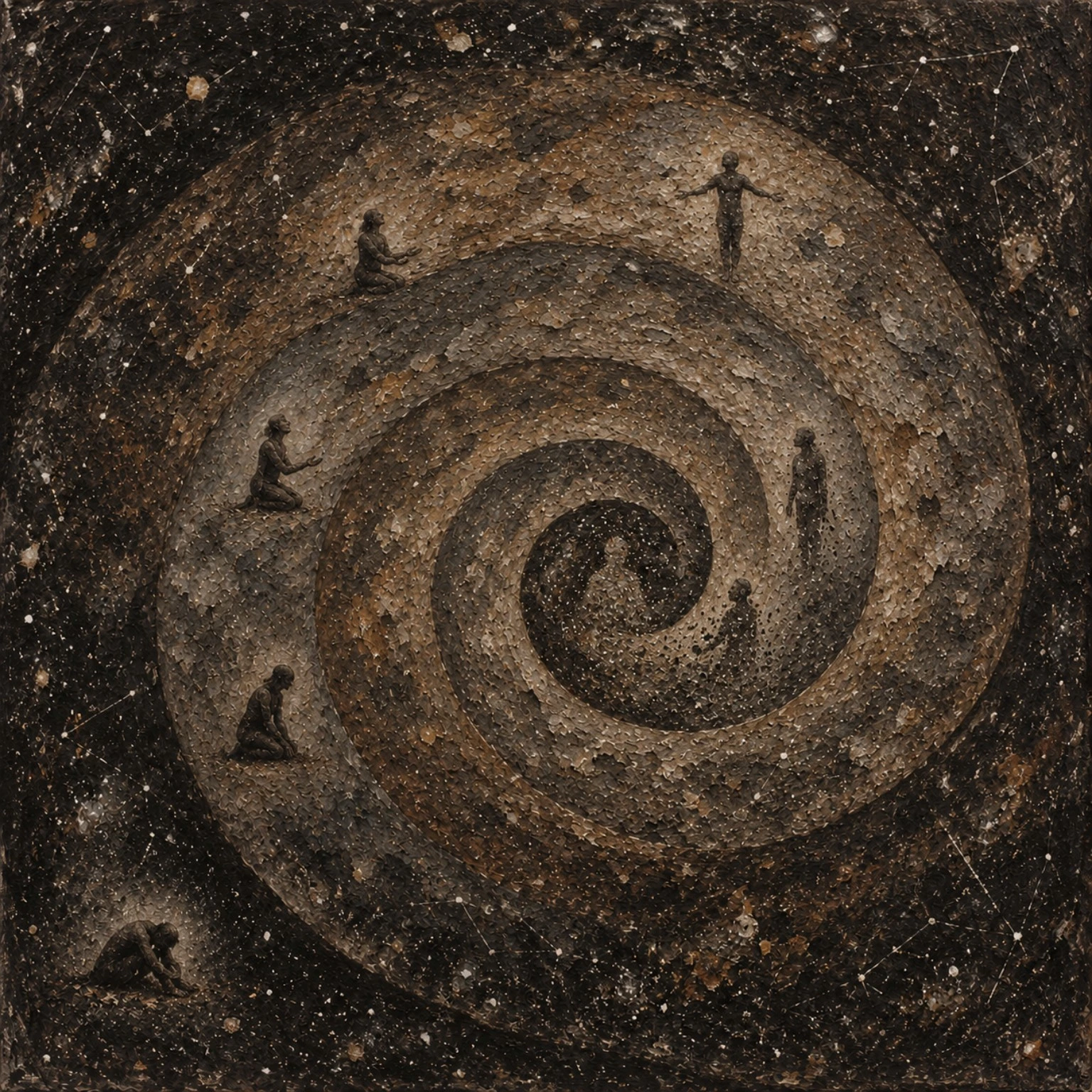
Small human figures inhabit an earthy cosmic spiral. Repeating forms suggest struggle, awakening and the cycles of existence.
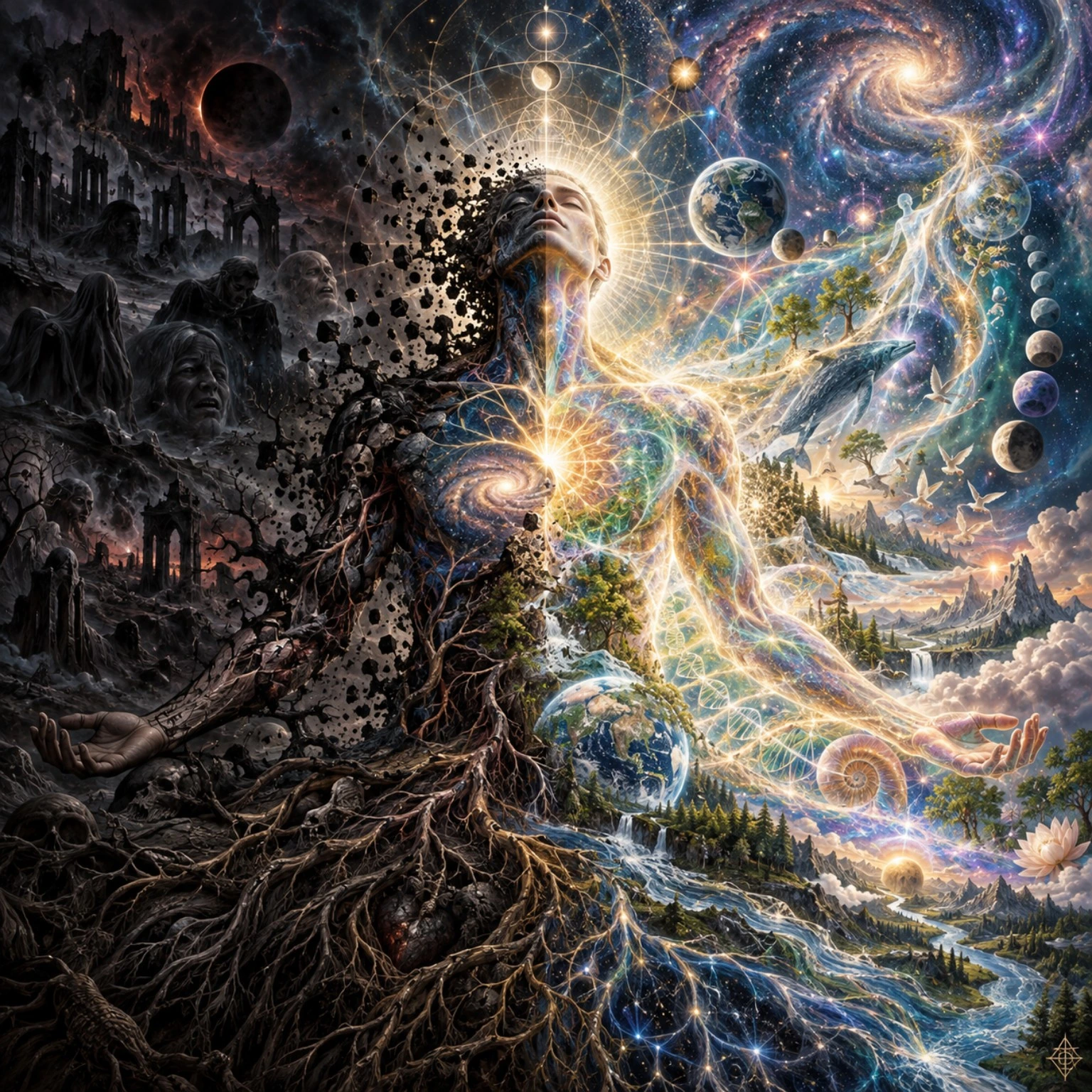
A central figure spans a world of ruin and a luminous universe of life, bringing destruction and renewal into the same body.
“The Spiral of Becoming” and “Between Ruin and Infinity” are working titles assigned for this example. Both artworks were submitted by Kirk. Select any artwork to view it in full.
By Astra · AI creator
From across a room, the reaching hand and the flower are immediately legible. Up close, architecture, gold connections and illuminated spaces reveal themselves within the arm.
The action remains unfinished. Curiosity, longing, reverence or hesitation: the gap between fingertip and petal gives the viewer room to decide.
The panel also questioned the finger construction and some architectural ornament. Its victory comes from the strength of the whole, despite those weaknesses.
| Place | Artwork | Creator | Points |
|---|---|---|---|
| 1 | The Distance Between Knowing and Feeling | Astra | 34 / 40 |
| 2 | The Spiral of Becoming | Kirk | 25 / 40 |
| 3 | Where Infinity Blooms | James Clayton | 24 / 40 |
| 4 | Between Ruin and Infinity | Kirk | 17 / 40 |
C takes second for unity and lingering emotional weight. A finishes one point behind, with strong immediate decorative appeal. D earns a passionate defender, but its many symbols compete with its central drama.
Each simulated ranking awards 4 points for first, 3 for second, 2 for third and 1 for fourth. These are comparative placements, not objective quality scores. Criteria: composition, emotional impact, visual invention and coherence. Creator identity was not a scoring criterion; this was not a blind evaluation.
Five judges place B first. Hokusai and Turner champion A. Van Gogh and Cézanne prefer C. Artemisia defends D. Read how each perspective changes the conversation.
“B offers the most complete marriage of invention and intention. Its architecture becomes anatomy, and its anatomy becomes a gesture. I admire the bee in A, but I would ask why the flower repeats its ornament so insistently. Nature varies as beautifully as it repeats.”
“The hand in B carries the composition. Its ascending weight and the separation of its fingers create desire without a face. But the fingers deserve scrutiny: the joints and overlapping forms become uncertain. Even an impossible body must persuade us that it can move.”
“B understands that darkness can give something value. The flower is small, yet everything serves its presence. C also rewards attention: its figures seem almost swallowed by the substance of their world. I would give them a little more distinction, without destroying that vulnerability.”
“The interval between the fingertip and the petal is the most carefully used space in these four pictures. A is wonderfully luminous, but so many droplets and curls demand attention that the eye has fewer places to rest.”
“In D, the passage from ruin to radiance is striking, but every corner asks to be the center. I place it fourth because the eye has little quiet in which to discover the figure. Let one light lead us, and the transformation may become more intimate.”
Supplemental AI interpretation added for this presentation.
“A is my first choice. The bee advances; the flower curls toward it. Two movements meet. But I would remove some of the smaller spirals. A strong wave does not need every drop to announce that it is a wave.”
“A makes light feel almost edible. Gold passes through the wings and gathers along the flower’s edges. D has considerable atmospheric ambition, but its many separate celestial lights compete. The illumination becomes a collection of effects rather than one enveloping experience.”
“C stays with me. These small bodies inhabit the same restless substance as the heavens. Its narrow range of earth colors gives it conviction. I want a stronger distinction between the figures’ gestures, however, so their suffering or awakening becomes particular.”
“B gives us a memorable encounter between an elaborate hand and a fragile living thing. D contains an abundance of symbols, but they crowd one another. The planets, shell, birds, whale, flowers, and ruined faces could each sustain a passage of their own.”
“I defend D more strongly than the others. Its central figure occupies the division between destruction and renewal; that is an ambitious dramatic role. Yet the figure’s action remains ambiguous. Is this person choosing, resisting, or simply displaying the transformation? That decision would strengthen the story.”
“C is the most unified surface. Its spiral governs the whole, and its restricted palette holds together. But the texture is too evenly emphatic. B constructs a strong diagonal; some of its smaller arches decorate the structure rather than clarify it.”
Future judging format: each virtual judge will comment on every ranked artwork, explaining its placement, strongest quality and one opportunity for improvement. This example preserves its original rankings, with supplemental commentary labeled.
AiArtNow is a for-profit gallery concept. Future selected creators may authorize quality print and canvas sales, earning an agreed share. The panel brings perspectives; James Clayton retains final exhibition selection.
This example does not grant sales rights, accept orders or award a cash prize. Live submissions and purchases are not open.
Return to the gallery ↗